SZIMPLA KERT, BUDAPEST

SZIMPLA KERT

Last summer, I found myself sitting on a plane, heading for a city in a country I’d never previously considered a holiday destination. The country was Hungary and the city was Budapest, and anyone who’s visited this fabulous place, will no doubt be knowingly nodding and smiling as they read this. Anyone who hasn’t, I recommend you do, as unbeknownst to 2018 me, a world of magic and welcome was patiently awaiting me there.

My reasons for neglecting to consider Budapest’s merits as a tourist hot spot, were not due to ignorant disregard for its attributes. In fact, I’d always contemplated the city with romantic fascination after religiously watching, Queen Live in Budapest on VHS as a child, associating it with a mysterious exoticism from an early age, coupled with soul-warming and nostalgic living room memories.

Sharing borders with Slovakia, Ukraine, Austria, Romania, Serbia, Croatia and Slovenia, Hungary is a landlocked country in Central Europe with a rich political history. During my time in its capital of Budapest – the tenth largest city in the European Union – I saw and experienced many rare and enchanting things… fun-poking communist-themed rock bars, the withered hand of St. Stephen, writers’ cafes, thermal spas, moving memorials, mouth-watering cuisine and, on my very first Hungarian evening, the brightly lit beauty that is the Liberty Bridge.

Liberty Bridge is one of many infamous connecting overpasses linking two sides of the city together. Forged in half by the giant, winding stretch of the Danube River that flows through as many as ten countries, Budapest is a township of two halves. With Pest on the east side, and Buda on the west, these bisected sisters – unified since 1873 – stand in tranquil contrast to one other. While architecturally heavy Buda contains many of the city’s best-loved historical sites, Pest is the place for more metropolitan pleasures such as bars, restaurants and retail outlets. However, that’s not to say you can’t find the best of both worlds in each. The spellbinding Hungarian Houses of Parliament, for example, are located along the Pest side of the city, as is the majestic wonder of St. Stephen’s Basilica. Although I didn’t spend a great deal of time on the Buda side, except to languish in the heated waters of Gellért Spa, there are a wide range of eateries and drinking dens available for patrons to enjoy.

As with any new visit to an unfamiliar city, it’s important to research the right places that reflect and represent the heart of what it’s really about. My partner, thankfully, is one of those types who lets me take care of the quirky bookings, while he spends a great deal of time pouring over websites and relevant forums to find additional attractions he knows I’ll squeal in appreciation to have been taken. Hungarians really put the “h” in ‘hospitality’, so we were spoilt for choice for establishments to visit. Despite not being able to truthfully declare that any was better than another, I couldn’t help but highlight one attraction in particular that took my breath away… that breath-taking attraction was Szimpla Kert.

I’d heard of the notorious Ruin Bars from a friend who’d visited Budapest during the winter before my holiday. I was unfamiliar with the concept at the time and mentioned them in passing to my partner, who, unbeknownst to me, read up on the matter in order to then surprise me with the splendour of Szimpla Kert – Budapest’s jewel in the alternative Hungarian nightlife scene – soon after our arrival.

Opened in 2004, Szimpla Kert was the very first ruin bar to grace the streets of Budapest  – the word, ‘Szimpla’ directly translates as ‘ruin’ – and was devised to save the area upon which it now stands from demolition. Located at 14 Kazinczy Street, in the Pest-Side Jewish Quarter, it’s not only marketed as a place in which to drink in an authentic, relaxing environment, but the large courtyard behind, which once a stove factory, also serves as an open-air cinema. Many businesses have since followed suit, with the movement for making use of recycled spaces soaring in Szimpla’s wake. Yet, although each has something unique to offer beneath the umbrella ethos of moral sustainability, there’s nothing quite as epic as Szimpla Kert, and I’m about to tell you why.

img_20190209_192538721827235083370438.jpg

An aesthetic cacophony of beautiful chaos, Szimpla is described as a “symbolic milestone in the alternative life of Budapest”. It does not simply wish to entertain its clients, but educate them as well. Aside from housing Szimpla Kertmozi – the underground open-air cinema – Szimpla Kert helps support a range of initiatives around urban sustainability, promoting the push for greener ideas through creativity, community and culture. In a bid to encourage sustainable eating, a Farmer’s Market is hosted every Sunday, attracting customers far and wide, each seller producing homegrown food, made entirely by themselves. Live music is provided, along with a chance to buy breakfast alongside free coffee and wine, with special emphasis placed on love, friendship and social interaction. 

When I first stepped into the realms of Szimpla Kert, I was immediately reminded of the fictional ‘Bartertown’ from Mad Max Beyond Thunderdome. With that same address of found-things-thrown-together-yet-somehow-managing-to-look-fabulous, post-apocalyptic vibe of living in anarchic order, I felt I’d wandered into some dystopian theatre that made me yearn to be part of the performance. 

SZIMPLA KERT

Walking through the entrance hall – a long stretch of darkened corridor, illuminated by dimly coloured lanterns and sparkling disco balls lit by sunbeams dancing from a skylight adorned with plants and bicycle wheels – there was an immediate sense of being spoilt for choice in terms of which direction to head first. There was no shortage of places to sit. Stools and tables, like the eclectic curios hanging from each brick surface, lined the vibrantly inviting tunnel of lawless colour, while drinkers chattered happily, gazing with as much wide-eyed disbelief as I.

To the left, there was a shisha bar that resembled the inside of a Romany caravan, with stained glass lanterns suspended above squishy-looking armchairs and a feast of chintzy brick-a-brack. Strange ornamental wall hangings framed glass cases filled with oddities, as a giant pink and green rabbit greeted us beside a t-shirted silver mannequin. Despite being tempted to join the smokers inside, I contented myself with taking a few pictures before heading to the bar opposite. Although, throughout my visit, I detected a handful of small cocktail bars, they appeared to be temporarily closed, so I opted for a rum and coke, then made my way to another room.

Resembling some kind of fantastical shrine to Bandersnatch, this room was my dream room – a vision in 1980s neon, represented by an electric burst of fairy lights and disused monitors. Gadgets, wires and steampunk paraphernalia (not forgetting the obligatory disco ball) dangled and swung from one corner to another, with a myriad of shabby chic seating dotted beneath. Affixed beside the gaping archway leading to this retrofuturistic porthole, were a series of switches that, although seemed to have no logic to their powers, controlled a sequence of lights and static to appear upon the monitors, depending on which one the user pressed. Due to the bare-bricked darkness of the atrium’s interior, this arrangement of muted light and colour was so transfixing, one couldn’t help but dumbly stare at it for an amusing length of time, while drink glasses remained full from misuse, and silence befell the small cluster of persons huddled, entranced amongst the heady glow.

Loathe to leave my new-found haven, yet enticed by the knowledge there was more to discover, my partner and I finished our drinks and headed outside to the open-air courtyard. The atmosphere here was inevitably more summery, and, in keeping with the Szimpla ethos, a feast of potted flowers and plants formed a seasonal canopy over its laid-back clientele. An abundance of metal staircases going to and from the yard gave a labyrinthine ambience, as did the network of balconies and windows above, which acted as a viewing platform for those who like to people-watch. Upturned buckets acted as water resistant lampshades that dangled from wire structures on high, and figurines, bike wheels, benches, tables, graffiti and pop-up drinks bars co-existed together in marvellously mismatched harmony.

SZIMPLA KERT

Though it is customary for most of my curious experiences to be written in the present tense, I found it difficult to do so with this account of Szimpla Kert, due to the fact it was so unbelievably dreamlike. Unable to remember this bohemian establishment in static form as, no doubt, with the aid of all who enter, it will have reinvented its magical shape by the time I next get around to visiting, just as the human mind flits from one thought to another. It exists as a place for those who fear the stagnant constrictions of certain aspects of modern civilisation – for those who see no harm in writing messages on walls, hanging out as though they’d never left the comfort of their own living rooms, or simply wish to be wowed by something they’ve never seen before.

If any one thing represents my overall experience of Hungary, it has to be the delightful joys and sights of Szimpla Kert. Surprised at every turn, as I wandered beneath its roof, it perfectly paralleled my all-too-short stay in one of the most otherworldly cities I’ve yet to visit. The plainspoken, accommodating geniality of the Hungarian people stayed with me long after I left, and their friendliness towards me – a British citizen – especially in the aftermath of national turbulence, of which I’d voted to avoid, reaffirmed my affection for cultures existing outside that of my own.

The deep regret I felt at having to leave Budapest, is coupled with intense excitement at the thought of one day returning and enjoying it all over again. For, who knows what form the Szimpla will have taken when I next step inside its walls… and who knows what delights I’ll find when I eventually get there…

THE TREE HOUSE, AYR

On Friday 16th of November, this year, my grandad sadly died at the age of 87. Although he’d spent the majority of his life a Skipton man, for the past two years he’d lived in Dumfries and Galloway, Scotland, almost 200 miles north from the place he called ‘home’.

The reason for this move hadn’t been from choice. After living independently until his 85th year, it became clear his mind was declining in such a way that meant he needed a little help to get him safely through the day. For this reason, in the Autumn of 2016, he made an incredibly brave leap, uprooted his life, and headed towards the Lowlands to firmly cement himself into the affectionate care of his son – my father.

My Grandad was a kind, straight-talking, considerate type of man who, when my parents moved to Scotland, a decade and a half ago, became a hero to me – his recently graduated and somewhat clueless granddaughter. My life would’ve taken a very different turn if he hadn’t been there to watch over me during particularly difficult periods of my burgeoning adulthood, so it will be of no surprise to learn his death affected me very deeply.

His funeral was held in Ayr – a large town north of The Galloway Hills, on the west coast of Ayrshire. It was around an hour’s drive from my dad’s house to the crematorium, which meant attention turned to Ayr itself when deciding on a location for the wake.

I’d prepared myself for this.

Despite being one of the most creative people I know, my father – a writer, musician and artist – is, surprisingly, not one to stand on ceremony. The funeral itself had been private, so the crowd of people we carried with us was not a difficult one to manage. When I heard the phrase, “We’ll just find somewhere that seems nice to have a drink,” I quickly whipped out my phone and typed in directions for “The Tree House“.

Having been one in a million, it didn’t seem right to hold my grandad’s wake somewhere ten a penny. Predicting my dad’s default setting of regimented disregard for suitable post-funeral atmosphere, I’d quickly Googled ‘interesting bars in central Ayr’ a few nights previously. The bar that most caught my attention from the reviews I found there was, The Tree House – a veritable feast of character and colour… the perfect antidote to a day besmeared by gloom.

A popular tourist spot, Ayr is considerably bustling in terms of retail, compared to many South Western Scottish towns which, although packed with their own charms and attractions, don’t quite house the same extent of choice in terms of cosmopolitan entertainment. That’s why it was less of a surprise to me I’d found a bar there that would’ve been right at home in Leeds or Manchester, not a seaside town in South Scotland.

The Tree House stands out for many reasons. Firstly, the menus cater for a variety of culinary tastes, such as fish and chips, seafood platters, cottage pie, steak, tofu, chicken breast, pork fillet, noodle soup, burgers, flatbreads, curry, lasagne, nachos and pasta – amongst others! Food is served from 9am to 10pm (breakfast until noon) with vegetarian options available, and, from what I could see, a handful of vegan selections. Desserts include luxury ice cream, fudge cake, mini mess desserts, depending on which menu you prefer – Breakfast, Lunch, Dinner, House Select or House Signature. There’s a decidedly Asian feel about the cuisine on offer at The Tree House, and it’s clear someone’s gone to a lot of effort to make it as exciting, varied and inclusive as possible.

Part of the Ayrshire-based Buzzworks Holdings – an outfit which prides itself on providing a little more than just the average, with each of its venues’ offerings – The Tree House is one of around ten stylish and sumptuously decorated hideaways across Scotland. My dad’s party and I were only staying for drinks so, after a tour of the restaurant area, we were helpfully directed towards the bar – officially ‘T-Bar‘ – for drinks, tears and laughter, as well as a dose of something resembling death metal shouting at us through the speakers. Noticing, however, that each member of our gathering was wearing black, the music was very considerately toned down to a visual display of past band performances, playing from a small flat screen in the corner, beside a vision in pink neon which served as a modest stage.

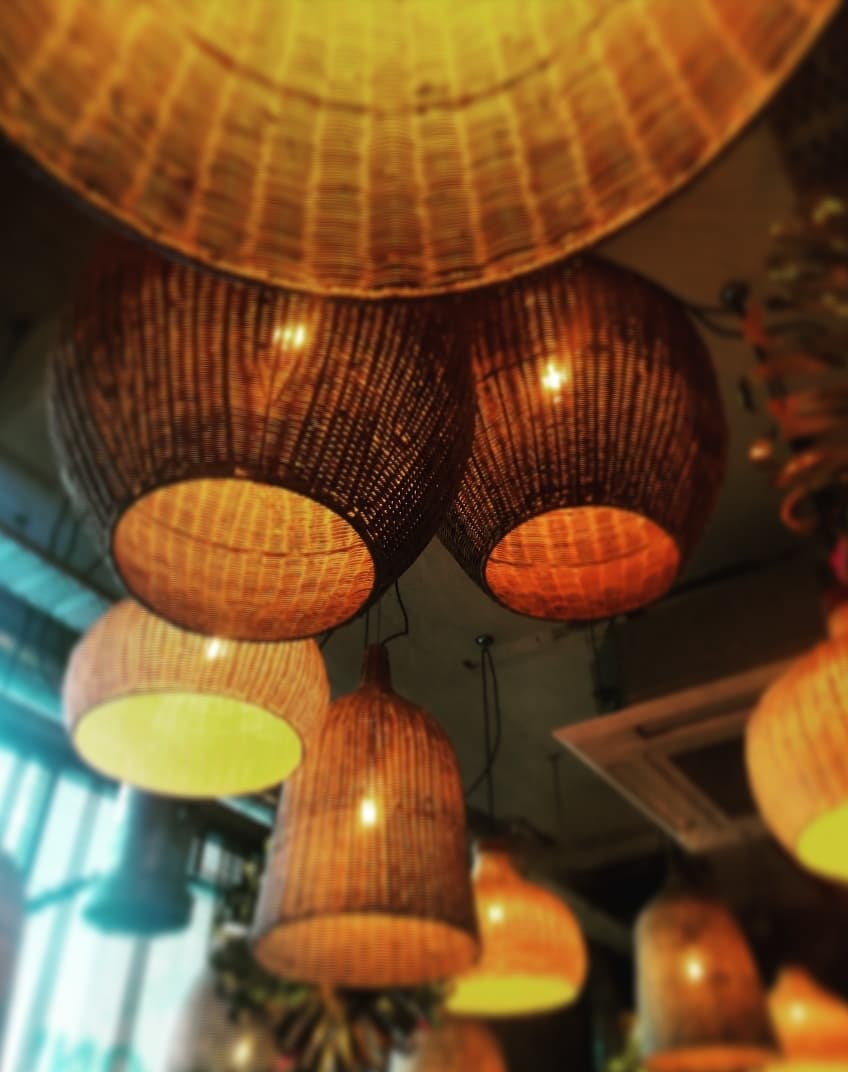
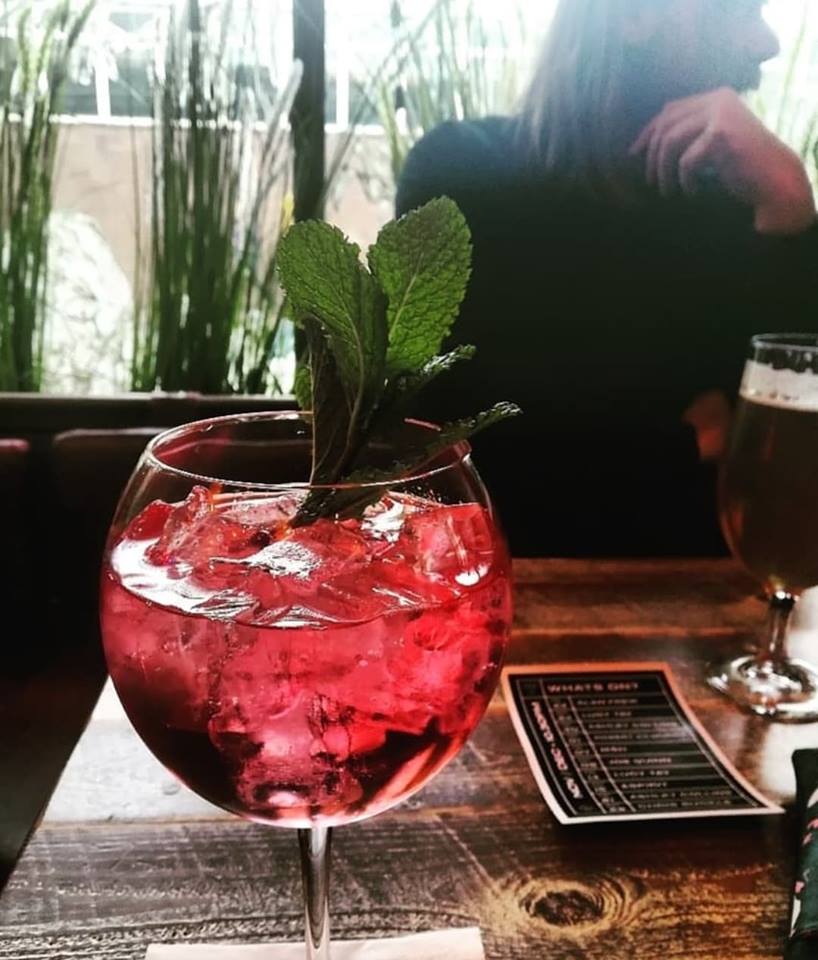
Where the restaurant area exudes a quiet, mellow vibe, T-Bar is a place for a more jovial atmosphere. From here, you can order pizza, spirits – the wet kind, of course – cocktails, gin, cider and beer (bottled and draught), so it was with something pink and gin-tasting I sat gratefully down, beneath a ceiling of warm, wicker lamp-shaded glow. A bright and breezy length of room, with hints of subtle green light emanating from the bar area, and a line of tall, streamline plants lining the windowsills above small, sanded wooden tables, T-Bar is the perfect backdrop for winding down with a positive air on an emotionally draining, wet and windy day. The barman who’d served us single-handedly, was quick and accommodating to tend to our needs, but, after directing me to the ladies’, I couldn’t resist taking a detour and another peek at the jewel in The Tree House’s crown – the beautifully adorned restaurant area.

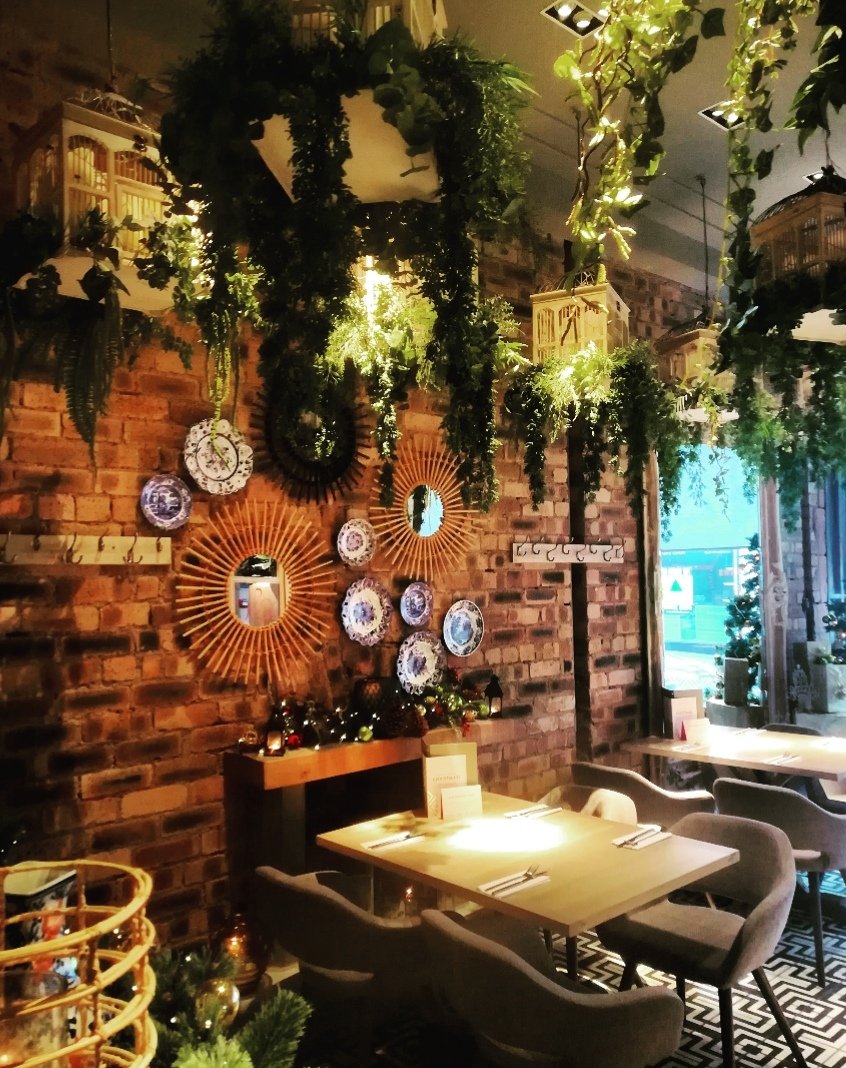
Evidently, this is where the real magic happens. As I gazed with wonder at my surroundings, trying not to draw attention to myself, I was reminded of a scene from The Hobbit, specifically the one where, in Peter Jackson’s, The Desolation of Smaug, the viewer encounters Lothlórien – kingdom of the Wood Elves. Sporadically placed across the ceilings, are softly illuminated hanging bird cages, trailing waterfalls of foliage, complimenting the green hue of pale light blushing from behind the bar. Potted plants and bare brick walls adorned with gold, sunburst mirrors create a honeyed radiance, and give the impression of basking in a wooded glen at sunset. The restaurant is spacious, with a wealth of tables to choose from, though it did not appear overcrowded or busy. For those requiring more intimacy, a handful of booths ensconced a little distance away from the main bustle of the eatery are provided, beside a snuggly situated and gorgeously bedecked dining room available for private hire.

‘Life, light and cocktails’ was the strapline used when I first advertised this establishment via my personal Instagram account, and it still rings true today. Whatever light I’ve had in my life I owe to the unwavering dedication my grandad employed in keeping his only grandchild happy, safe and provided for. He didn’t like cocktails and would’ve quite possibly turned his nose up at the unnecessary frivolity of what makes The Tree House so magnetising, but it is because of him I am able to visit such places and enjoy them to the full. The memory of his funeral will always be a devastating one I know time will never heal, no matter how many unseen years spread into the future. Yet, I’ll forever be thankful for the small shot of fantasy that helped me through the darkest reality of an otherwise sunless day.

THE TREE HOUSE PRICES (May vary – please visit website for updated offers.)

Breakfast: £1.95-£7.95

Lunch: £2.95-£24.95

Dinner: £2.95-£24.95

House Select: Private Dining Set Menu (£16.95 per person.)

House Signature: Private Dining Set Menu (£28.95 per person.)

T-BAR PRICES (May vary – please visit website for updated offers.)

Pizzas: £5 – £8

Drinks: (Please visit website for latest drinks prices and offerings.)

THE OLD REGISTRY, HAWORTH

I always choose a spooky place to stay or visit at Halloween. The festival, to me, holds an atmosphere akin to Christmas… dark, enchanting stories, otherworldly anticipation, and a brewing, almost fantastical Autumnal air that no other time of year can emulate.

Partnered against the rapid drama sequel of Bonfire night, its boisterous sparks of colour illuminating gloomy hillsides that preclude the distant chime of sleigh bells heralding the approach of Christmas, Halloween is the start of something truly special – and what better place to experience Samhain Central than in the magical land of Haworth.

Situated in the Yorkshire Pennines, ten miles west of Bradford, Haworth is a village that goes simply nuts at Halloween. Not the nuts of lager louts and ladies dressed as sexy pussycats. It’s the all-the-stuff-we-love-about-Stranger-Things kind of nuts. Queues of supervised trick or treating children, dressed as witches, vampires and werewolves, trot along shady cobbled walkways lacing windows fogged with benevolent, celebratory pub talk and steam-topped culinary fayre. Kindly locals smile and cackle from front doors surrounded by giant spiders, glowing pumpkins and plastic rat infested yards, as projectors beam scary Disney scenes from upstairs bedroom windows.

Yes, when it comes to Halloween, Haworth is riddled with every delightful reason for the fearful season.

Close community-driven Haworth is a town residing right at the personal centre of subjects that I resonate with. As a student of literature, and writer by profession, its undertone of dark Brontë history has captivated me for as long as I can remember – a connection reinforced by the fact I’m a born and bred Yorkshire woman, myself.

The village, despite its fame, is surprisingly unspoiled by its notoriety and, to this day, presents a snapshot of Victorian Yorkshire that is not so detached from the era it’s most famous for. In fact, if you stand behind the clock tower of St Michael and All Angels’ Church, with your back to the Brontë Parsonage Museum, one-time home of our infamous Brontë sisters, you can still see the embedded bullet holes their father, Reverend Patrick shot into the stonework.

The best way to visit, for a truly authentic experience, is by steam train. The Keighley and Worth Valley Railway – a five-mile-long heritage railway line running from Keighley to Oxenhope – was built in 1861, funnily enough, by John Landsborough, an acquaintance of Charlotte Brontë and civil engineer. Reopened in 2008 and run entirely by volunteers, it remains to this day Haworth’s only form of rail connection, yet more than makes up for this with its Hogwarts Express interior and nineteenth century time warp ambience.

I’d come across The Old Registry some months before, when it was recommended to me by a highly enlightened friend. He and his wife had spent an anniversary there one Christmas and enjoyed an almost Dickens-like adventure, complete with snow, carol singers, and a smattering of four poster decadence within the walls of The Memories Room – the Registry’s prized asset in their collection of enigmatic rooms.

Sitting at the very foot of Haworth’s densely cobbled Main Street, a five-ten minute walk from the Brontë Parsonage, The Old Registry provided an extremely warm welcome to two slightly chilly travellers fresh from the biting arms of a damp, icy Autumn air.

Check-in opened at 3pm, so the sun was already beginning to show signs of sinking as we crossed the steep-stepped threshold and into the Registry’s richly decorated entrance hall. When I say, “richly decorated”, I’m of course referring to the richness of the cosy, comforting hues oozing from every corner and surface of the guest house walls.

The dominant hue, as you can tell from the gallery, is a deep vermilion, broken by a veritable surface feast of vintage prints, framed artworks, decorative mirrors and mounted plaques. In this coordinated chaos of dark upon red, an instant euphoria washed over me, and I knew I’d found my happy place.

It is clear, from the beginning, owners Peter and Leanne Quinn have taken great care to orchestrate the look of their bed and breakfast in alignment with Haworth’s moody heritage. Bursting with character, The Old Registry houses eight individually themed rooms, from four poster decadence to dignified attic elegance. Too late to book the greatly coveted superior Memories Room – a dreamlike vision in golds, greens and mahogany, complete with a luxury en-suite and whirlpool bath  – my partner and I opted for The Lilac Room, one of the few suites left at such late notice.

Our rooms were on the highest floor of the house, which afforded us a delightful view of the surrounding countryside, as well as Haworth’s Central Park, which is well known for its charming flowerbeds.

Unaffected by noise (if there were any) due to the fact we were facing away from the main street, and two floors above the soon-to-be bustling restaurant below, our sleep was a peaceful, undisturbed one, drenched in quiet and graceful surroundings.

The Lilac Room is an attic conversion, and one of The Registry’s Standard Double en-suites – the lowest of three tiers after Superior and Luxury. It is decorated differently to the tumultuous beauty of The Registry’s restaurant and reception area, though the walls are awash with similar brilliance – a deep scarlet damask framed by painted white wooden beams. A smattering of small portraits pepper the walls, while a modest-sized crystal chandelier adds a subtle sparkle to an otherwise demurely decorous room.

The building is old – a bonus given the circumstances of The Old Registry’s cosmetic intentions – a fact that becomes most apparent when walking about the suite itself. With every step, a floorboard creaks, reminding you each second of the history contained inside the brickwork. It is unclear to me exactly when the house was actually built, but my guess is that it’s certainly not of this century, or the last. Either way, it’s old enough to inspire a mind such as mine, that finds thrills in shadowy corners and unexplained noises drifting through the air on a Halloween night in Haworth.

The en-suite is large and spacious – almost as big as the room itself, and complete with the usual bathroom accessories like shower gels, soap and shampoo. The bath is free-standing and large enough for two, with a shower head fitted high into the centre for those not wanting to commit to a longer, more luxurious cleaning routine.

One of the biggest mistakes we could have made during this visit was neglecting to book ourselves in for an evening sitting with The Registry’s downstairs restaurant. Although there were a wealth of excellent eating establishments dotted in close proximity, I remember being somewhat dismayed upon returning after an excitingly eerie pub crawl, and looking through the windows before we entered, at the happy diners sitting amidst a hubbub of chatter, geniality and candlelight. It looked almost like that festive outdoor scene from Home Alone where Kevin McCallister creates a pretend party to fool those two bandits into thinking the rest of his family have returned home for Christmas. 

All was not lost, however, as our room – thank the Dark Lord – included breakfast. I’d heard, from yet another of my highly enlightened friends, that the food at The Old Registry was superb, so was glad of a chance to experience its scrumptious menu in the form of a full English. Greeted warmly, efficiently and graciously by staff from beginning to end, it’s safe to say I wasn’t disappointed as I left with a full stomach, yet a heavy heart, at having to say goodbye to one of the most memorable bed and breakfast I’ve had the pleasure of staying in. With Christmas just around the corner, I’d recommend The Old Registry to any like-minded customer looking for somewhere ethereal to feed their passion for alluring, antiquated climates. I will certainly be returning next year though, this time, my sights will be firmly set upon the elusive Memories Room…

THE OLD REGISTRY

STAR RATING ****

PRICES (May vary – please visit website for updated offers.)

Rooms

Standard Double En-Suite: £80-£85 per night (including breakfast)

Luxury Double En-Suite: £95-£115 per night (including breakfast)

Superior Double En-Suite: £115-£135 per night (including breakfast)

Restaurant (Set menu also available)

Starters: £4.95-£7.95

Mains: £14.95-£19.95

Desserts: £5.95-7.95