THE WITCHERY BY THE CASTLE, EDINBURGH

It’s no secret to anyone who knows me well, that Edinburgh is, by an incredibly long stretch, my favourite city in the entire world. It’s also no secret to those of you kind enough to have read my previous blogs, that I harbour an almost obsessive love of all things dark, mysterious and altogether spooky…

The Witchery by the Castle is as moody and magical as the streets upon which it sits. The perfect epitome of its mother city, with her shaded closes, towering medieval castle, and bleak history, it’s the stuff great stories are made of, and the ideal platform on which for someone like me to indulge their penchant for atmospheric delights.

This five star rated boutique Gothic hotel and restaurant first came to my attention sometime during my early childhood. Due to the fact my mother’s side of the family hailed from New Town, Edinburgh, I would, quite often, accompany my grandma on visits to see family relatives who still resided within the city. These excursions played an integral part in my lifelong love affair with Edinburgh, not only because they were my first experience of overnight urban living – the idea that life continued outside of daytime hours was still an entirely new concept to a young girl living in the relative quiet of the Yorkshire Dales – but because it was like gazing at a tangible reflection of all the things I loved in stories. 

Castles, cobbles, graveyards, towering medieval architecture worm-holed with snakelike crevices of dangerously thrilling closes littered with the richest tales of history available to humanity… it’s no wonder Edinburgh’s timeworn walkways formed a heart-shaped anchor of inspiration in the foundation of my existence. 

Grassmarket, Edinburgh

A firm favourite activity of these early Edinburgh vacations, would be for my grandma to book herself and I on a ghost tour. Tourists, visitors and residents alike are spoilt for choice with regards to underground jaunts, supernatural circuits and historical walks around the city. However, for my family and I, the best by far was – and still is – The Cadies & Witchery Tours of 84 West Bow. The brain child of Robin Mitchell, playwright extraordinaire and occult enthusiast, The C & W Tours combine their own particular mix of comedic theatre and murderous trivia with which to entertain their guests, and I can honestly say I never laugh so hard, whilst quaking with fear, than I do when I’m with this merry bunch of artists.

Tours are available every night of the year, beginning at 7pm, just below Castlehill – which may seem like a shameless advertisement, however, it happens to be an important link to my tale, as the exact meeting point has been, for as long as I can remember, right outside the entrance to The Witchery.

Frequented by the famous, The Witchery by the Castle has long held an allure of unattainability, or, at least it did at one time to wide-eyed, wondrous, childhood me as my grandma and I joined the ghost tour congregation, blanketed by descending night, peering with interested awe into the lowdown windows of the restaurant lacing the cobbles of The Royal Mile. As stated, The Witchery is both restaurant and hotel, with suites available from around £345 per night.

It was this last fact that, for a long time, kept the idea of staying at The Witchery firmly locked away in my mind’s, ‘Most Naughty and Decadent Life Goals’ closet. However, years later, sometime during my mid-twenties, I had the idea of taking my grandma on a trip around our old Edinburgh haunts and spending an evening not merely gazing through The Witchery’s windows, but actually dining on the other side of them instead. It was her seventieth birthday present from me to her, and I can’t tell you how it felt to finally share in that moment of euphoric nostalgia, creating a minute-by-minute memory of something that meant so much in equal measures to us both.

It wasn’t until just under a decade later, that the irresistible urge to experience The Witchery in its entirety finally overcame me. As stated in an earlier post, written in celebration of my most-loved season, I always pick somewhere special to stay for Halloween. Due to the fact, I’d also recently completed my first self-published novel, I couldn’t think of a better time than this to treat myself to a Most Naughty and Decadent Life Goal which, as you’ve already guessed, was an evening dining and sleeping at The Witchery.

The Old Rectory, The Witchery by the Castle

When it came to picking a room, I was initially distressed by the fact I couldn’t sleep in every single one of them. The Witchery has nine rooms, each one oozing with sumptuous upholstery, shadowy corners and lavish curios. The colour scheme for each is an unapologetic nod to Gothic Romanticism, with a bit of The Tudors mixed in for good measure. Golds, reds, greens and purples dominate the pallets of these lovingly crafted suites, so you can imagine how torn I was at having to choose one over the other.

Though, being a writer, I was tempted to select The Library room, with its book-lined walls and secret staircase, the story-lover overcame the story-teller in me and I opted – quite willingly – for The Old Rectory. With a theatrical ambience of shameless religious overtones, draped in crimson and garnished with gold, I couldn’t resist the thought of experiencing this suite first-hand. So, it was with great excitement and long-awaited joy that I booked myself in for a night at my childhood dream hotel.

Founded in 1979 by renowned hotelier, James Thomson, The Witchery by the Castle was originally created in an effort to save Boswell’s Court, the sixteenth-century close, and site, upon which the hotel’s buildings stand. Forty years later, The Witchery has gained an almost cult-like following of clientele due to its unique status and magnetic allure. Skimming through the online guestbook, you’ll notice such names as Roger Taylor, Brian Ferry, John Cleese, Emma Thompson and (my ultimate favourite) The Darkness immortalised amongst its pages and its no wonder its spellbinding sophistication draws such creative infamy to its door.

The Witchery contains two main eateries… the baroque-themed candlelit dining room – simply named, ‘The Witchery’ – I visited with my grandma over a decade ago, and The Secret Garden restaurant, opened in 1990 and built on a forgotten schoolyard. Upon checking in on Halloween, 2016, I was immediately aware of the latter as, beneath the dark wooden reception desk – known as ‘the pulpit’ – which forms a picturesque balcony above a descending spiral staircase, a botanical delight of fairy tale magic beckoned to me from the room below. I was, of course, looking at The Secret Garden. Garlands of flowers hang from various positions of beauty, illuminated by a glass roof skylight that gives the restaurant an airy glow compared to the shadowy recesses of its glinting – but equally dazzling – sister restaurant. Under a painted ceiling, complemented by autumn scenery visible through French windows stretching to the left, The Secret Garden is certainly one charming sight to behold, and a striking testament to The Witchery’s distinctive reputation.

The Old Rectory, The Witchery by the Castle

After checking in, we were shown to our suite which, as stated, was The Old Rectory apartment. Accessed from outside, in a tall turret, via a steep, spiral, stone staircase, this particular apartment is located a couple of floors up and directly overlooks The Royal Mile. Our male guide seemed happily impressed – and perhaps slightly amused – by my initial surprise over the size of the room, yet, after very kindly helping me with my bags, he handed over the key and wished me a pleasant stay.

Nothing could’ve prepared me for the heart-hugging wonder of what I saw before me as I entered the Old Rectory. Strains of nostalgia-inducing bagpipes drifted through the open windows as classic music played from a radio near the fireplace. Consisting of two main rooms (not including the bathroom), the suite contains a four-poster bed, day bed, sofa, armchair, dressing table, dining table, mini fridge, television and ironing board (with iron) – all the key amenities for a fabulous night in. Complimentary champagne cools in ice in a silver ornate bowl beside The Witchery’s own branded chocolate selection, with civilised tea and coffee making facilities, complete with cups and saucers sitting upon the dining table cloth.

Bookcases adorned with gilded pinnacles bookmark each side of the fireplace against deep red walls, behind the clerically themed four-poster bed which, I read, is genuinely fashioned from old pulpits. Beams of dim light creep from beneath lampshades, casting little glows of eerie brightness across various sections of each room, as a mannequin dressed in tartan and bearskin hat stands guard by the furthermost window.

The Old Rectory, The Witchery by the Castle

As stated many times already, cardinal red is the overarching hue, spreading across each crevice of this gorgeously Gothic apartment, with swirls of flaming gold piercing its saintly claret canvas in a halo of halcyon. Religious paraphernalia in plate, trinket box, goblet and statue form grace numerous surfaces, while, from the day bed, a comfortable reclining station crouches opposite a closeted television and drink-making centre.

The bathroom we’ll come to later, but first, it was time to ready myself for an evening’s dining in. Finding it difficult to prise myself away from the window-side settee, as, gazing down at the hustle and bustle of Castlehill, I felt an irresistible longing to relive my Edinburgh memories through people-watching form, I eventually dressed and trotted back down the sixteenth-century staircase and alighted upon the doorstep of The Witchery restaurant.

I’d decided to go down the traditional route and choose the same – and original – restaurant I’d visited with my grandma all those years ago. Satisfied I’d at least had a good gander at The Secret Garden, I felt no qualms in reverting back to that which I knew best. The entrance to The Witchery is located through an equidistant archway, between the reception desk and my turreted doorway. Those simply dining out for the evening from separate locations, will find access to The Witchery’s main courtyard beneath the red, gold and blue court of arms that hangs above the aged corridor to Boswell’s Court.

There’s a touch of Game of Thrones to the aroma of The Witchery’s moody decor. Reeking of medieval banquet rooms with discs of hammered gold gracing the ornate, wood panelled walls that flicker enigmatically in the somewhat ghostly light shimmering from a host of candlelit tables, this restaurant is as supernaturally compelling as its notoriety suggests. In true Witchery style, a wave of deep red colours the cushioned benches lining each wall of the low-ceilinged chamber, and intricate carvings stare out at you from hinged arm rests, and ornamental roof panels.

Food at The Witchery ranges from around £7.50 – £96.00, though a lunchtime offering of two courses for £22 is available from 12:30 noon – 4:30pm. Though it does provide a small selection of vegetarian starters and mains, its meat and fish dishes are widely considered to be primary specialities. Though my diet has since become predominantly meat free, back then, I decided to treat myself to a starter of steak tartare, seasoned with raw prime Scotch Borders beef with raw quail egg, and a main of roast fillet of Scrabster cod, with crushed butternut squash and grilled wild leek. As for The Witchery’s wine list, I feel confident in saying it’s particularly extensive, though, being ignorant of the merits of red wine (a glass of which I had and can’t, for the life of me, remember the name of!), all I can tell you is that it was nice and aptly matched the decor of my surroundings. The restaurant’s table service was, of course, impeccable and I felt duly attended to throughout the experience until it was time to retire to my lodgings and take full advantage of The Old Rectory’s free-standing bath.

The Old Rectory, The Witchery by the Castle

I have a thing about bathrooms. The more intriguing and ominously vintage they are, the more interested I am in spending time with them. For this reason, the bathroom of The Old Rectory did not fail to disappoint. Located behind a secret door (which, during my stay, kept spookily opening of its own accord) within the panels of the day bed area, it contains two sinks with ornate gold mirrors, library-themed wallpaper, curious portraits, an en-suite toilet plus shower – secreted behind yet another hidden door – and, more importantly, a two-person silver bath in the centre of the room.

Making full use of my complimentary dressing gown and slippers, I let the water run, whilst enjoying a relaxing moment or two, sitting in an armchair beside the open window and listening to those same street sounds that had so excited me as a child visiting Edinburgh for the first time almost twenty five years ago. Gazing up at the ceiling, with its swirls of painted print stretching over every surface, I happily drank a glass or two of champagne and raised a glass to my grandma who, though is thankfully still with us, could not be there with me.

I have to admit, my night was a little restless. This was not due to any discomfort – in fact, the bed was one of the most luxurious I’d ever slept it – but because I found it difficult to douse the adrenaline I felt at having finally stayed beneath the roof of an establishment I’d long wished to frequent. Loath to shut my eyes for fear of missing out on each sacred minute of splendour, I instead lay there listening to the city around me, wondering at the source of a curious soft banging that seemed to emanate from somewhere behind the fireplace. Convinced it was the spirit of some tormented soul entrapped within the aged brickwork as a result of sixteenth-century foul play, I mentally concocted story after story as I snuggled between the copious red cushions, smiling all the while at how perfect the evening had been.

When morning came, I was admittedly bleary-eyed and sleepy, but the welcome sight of a gentleman quietly slipping a breakfast hamper through my door and tiptoeing respectfully away before I could even thank him, quickly replenished my energy levels. Upon opening it, I discovered an abundance of hot coffee, tea, milk, croissants, jams, cheese, continental meats, yoghurts, cereals, fruit and fresh juice – everything I needed and more for a luxuriant morning feast. The dining table, which had, so far, been used as a drinks station, now came into its own and provided a deliciously comfortable platform upon which to enjoy a relaxing breakfast, unobserved by fellow guests.

I had absolutely no desire to leave The Witchery when it finally came close to checking-out time, and it was with huge sadness I packed my belongings and dragged myself down the staircase to hand my key in at reception. Not only had this beautiful backdrop transported me to a world that set my soul alight, but the attention and impeccable manners of the hotel’s staff made me feel a respected and integral part of the whole Witchery experience. It’s been a couple of years now since my last visit and already I can feel its bewitching pull, invoking me to pick up where I left off, and languish in the parlour of its magical chambers once more. Who knows, perhaps the studious alcoves of The Library might tempt me to return, or the regal regiments of The Armoury, with its window-lined walkway could provide inspiration for my next piece of descriptive scribble. Whatever the future outcome, I am not yet done with The Witchery and The Witchery is certainly not yet done with me – a state of existence I’m delighted to indulge, in the hope we’ll meet and enjoy each other again, very soon.

THE WITCHERY BY THE CASTLE

STAR RATING *****

PRICES (May vary – please visit website for updated offers.)

ROOMS

From £345 per night (including breakfast, champagne, cookies, mineral water, newspaper and turn down service)

FOOD

A La Carte Menu

Starters: £7.50-£16.50

Mains: £16.00-£96.00 (with sharing options)

Desserts: £7.00-£13.50

The Lunch Menu (12:30 noon – 4:30pm)

Two Courses: £22.00 per person

Witchery Afternoon Tea (Monday – Friday, from 3pm until 4:30pm): £30 per person

Witchery Champagne Afternoon Tea (Monday – Friday, from 3pm until 4:30pm): £40 per person

Witchery Rosé Champagne Afternoon Tea (Monday – Friday, from 3pm until 4:30pm): £47 per person

SZIMPLA KERT, BUDAPEST

SZIMPLA KERT

Last summer, I found myself sitting on a plane, heading for a city in a country I’d never previously considered a holiday destination. The country was Hungary and the city was Budapest, and anyone who’s visited this fabulous place, will no doubt be knowingly nodding and smiling as they read this. Anyone who hasn’t, I recommend you do, as unbeknownst to 2018 me, a world of magic and welcome was patiently awaiting me there.

My reasons for neglecting to consider Budapest’s merits as a tourist hot spot, were not due to ignorant disregard for its attributes. In fact, I’d always contemplated the city with romantic fascination after religiously watching, Queen Live in Budapest on VHS as a child, associating it with a mysterious exoticism from an early age, coupled with soul-warming and nostalgic living room memories.

Sharing borders with Slovakia, Ukraine, Austria, Romania, Serbia, Croatia and Slovenia, Hungary is a landlocked country in Central Europe with a rich political history. During my time in its capital of Budapest – the tenth largest city in the European Union – I saw and experienced many rare and enchanting things… fun-poking communist-themed rock bars, the withered hand of St. Stephen, writers’ cafes, thermal spas, moving memorials, mouth-watering cuisine and, on my very first Hungarian evening, the brightly lit beauty that is the Liberty Bridge.

Liberty Bridge is one of many infamous connecting overpasses linking two sides of the city together. Forged in half by the giant, winding stretch of the Danube River that flows through as many as ten countries, Budapest is a township of two halves. With Pest on the east side, and Buda on the west, these bisected sisters – unified since 1873 – stand in tranquil contrast to one other. While architecturally heavy Buda contains many of the city’s best-loved historical sites, Pest is the place for more metropolitan pleasures such as bars, restaurants and retail outlets. However, that’s not to say you can’t find the best of both worlds in each. The spellbinding Hungarian Houses of Parliament, for example, are located along the Pest side of the city, as is the majestic wonder of St. Stephen’s Basilica. Although I didn’t spend a great deal of time on the Buda side, except to languish in the heated waters of Gellért Spa, there are a wide range of eateries and drinking dens available for patrons to enjoy.

As with any new visit to an unfamiliar city, it’s important to research the right places that reflect and represent the heart of what it’s really about. My partner, thankfully, is one of those types who lets me take care of the quirky bookings, while he spends a great deal of time pouring over websites and relevant forums to find additional attractions he knows I’ll squeal in appreciation to have been taken. Hungarians really put the “h” in ‘hospitality’, so we were spoilt for choice for establishments to visit. Despite not being able to truthfully declare that any was better than another, I couldn’t help but highlight one attraction in particular that took my breath away… that breath-taking attraction was Szimpla Kert.

I’d heard of the notorious Ruin Bars from a friend who’d visited Budapest during the winter before my holiday. I was unfamiliar with the concept at the time and mentioned them in passing to my partner, who, unbeknownst to me, read up on the matter in order to then surprise me with the splendour of Szimpla Kert – Budapest’s jewel in the alternative Hungarian nightlife scene – soon after our arrival.

Opened in 2004, Szimpla Kert was the very first ruin bar to grace the streets of Budapest  – the word, ‘Szimpla’ directly translates as ‘ruin’ – and was devised to save the area upon which it now stands from demolition. Located at 14 Kazinczy Street, in the Pest-Side Jewish Quarter, it’s not only marketed as a place in which to drink in an authentic, relaxing environment, but the large courtyard behind, which once a stove factory, also serves as an open-air cinema. Many businesses have since followed suit, with the movement for making use of recycled spaces soaring in Szimpla’s wake. Yet, although each has something unique to offer beneath the umbrella ethos of moral sustainability, there’s nothing quite as epic as Szimpla Kert, and I’m about to tell you why.

img_20190209_192538721827235083370438.jpg

An aesthetic cacophony of beautiful chaos, Szimpla is described as a “symbolic milestone in the alternative life of Budapest”. It does not simply wish to entertain its clients, but educate them as well. Aside from housing Szimpla Kertmozi – the underground open-air cinema – Szimpla Kert helps support a range of initiatives around urban sustainability, promoting the push for greener ideas through creativity, community and culture. In a bid to encourage sustainable eating, a Farmer’s Market is hosted every Sunday, attracting customers far and wide, each seller producing homegrown food, made entirely by themselves. Live music is provided, along with a chance to buy breakfast alongside free coffee and wine, with special emphasis placed on love, friendship and social interaction. 

When I first stepped into the realms of Szimpla Kert, I was immediately reminded of the fictional ‘Bartertown’ from Mad Max Beyond Thunderdome. With that same address of found-things-thrown-together-yet-somehow-managing-to-look-fabulous, post-apocalyptic vibe of living in anarchic order, I felt I’d wandered into some dystopian theatre that made me yearn to be part of the performance. 

SZIMPLA KERT

Walking through the entrance hall – a long stretch of darkened corridor, illuminated by dimly coloured lanterns and sparkling disco balls lit by sunbeams dancing from a skylight adorned with plants and bicycle wheels – there was an immediate sense of being spoilt for choice in terms of which direction to head first. There was no shortage of places to sit. Stools and tables, like the eclectic curios hanging from each brick surface, lined the vibrantly inviting tunnel of lawless colour, while drinkers chattered happily, gazing with as much wide-eyed disbelief as I.

To the left, there was a shisha bar that resembled the inside of a Romany caravan, with stained glass lanterns suspended above squishy-looking armchairs and a feast of chintzy brick-a-brack. Strange ornamental wall hangings framed glass cases filled with oddities, as a giant pink and green rabbit greeted us beside a t-shirted silver mannequin. Despite being tempted to join the smokers inside, I contented myself with taking a few pictures before heading to the bar opposite. Although, throughout my visit, I detected a handful of small cocktail bars, they appeared to be temporarily closed, so I opted for a rum and coke, then made my way to another room.

Resembling some kind of fantastical shrine to Bandersnatch, this room was my dream room – a vision in 1980s neon, represented by an electric burst of fairy lights and disused monitors. Gadgets, wires and steampunk paraphernalia (not forgetting the obligatory disco ball) dangled and swung from one corner to another, with a myriad of shabby chic seating dotted beneath. Affixed beside the gaping archway leading to this retrofuturistic porthole, were a series of switches that, although seemed to have no logic to their powers, controlled a sequence of lights and static to appear upon the monitors, depending on which one the user pressed. Due to the bare-bricked darkness of the atrium’s interior, this arrangement of muted light and colour was so transfixing, one couldn’t help but dumbly stare at it for an amusing length of time, while drink glasses remained full from misuse, and silence befell the small cluster of persons huddled, entranced amongst the heady glow.

Loathe to leave my new-found haven, yet enticed by the knowledge there was more to discover, my partner and I finished our drinks and headed outside to the open-air courtyard. The atmosphere here was inevitably more summery, and, in keeping with the Szimpla ethos, a feast of potted flowers and plants formed a seasonal canopy over its laid-back clientele. An abundance of metal staircases going to and from the yard gave a labyrinthine ambience, as did the network of balconies and windows above, which acted as a viewing platform for those who like to people-watch. Upturned buckets acted as water resistant lampshades that dangled from wire structures on high, and figurines, bike wheels, benches, tables, graffiti and pop-up drinks bars co-existed together in marvellously mismatched harmony.

SZIMPLA KERT

Though it is customary for most of my curious experiences to be written in the present tense, I found it difficult to do so with this account of Szimpla Kert, due to the fact it was so unbelievably dreamlike. Unable to remember this bohemian establishment in static form as, no doubt, with the aid of all who enter, it will have reinvented its magical shape by the time I next get around to visiting, just as the human mind flits from one thought to another. It exists as a place for those who fear the stagnant constrictions of certain aspects of modern civilisation – for those who see no harm in writing messages on walls, hanging out as though they’d never left the comfort of their own living rooms, or simply wish to be wowed by something they’ve never seen before.

If any one thing represents my overall experience of Hungary, it has to be the delightful joys and sights of Szimpla Kert. Surprised at every turn, as I wandered beneath its roof, it perfectly paralleled my all-too-short stay in one of the most otherworldly cities I’ve yet to visit. The plainspoken, accommodating geniality of the Hungarian people stayed with me long after I left, and their friendliness towards me – a British citizen – especially in the aftermath of national turbulence, of which I’d voted to avoid, reaffirmed my affection for cultures existing outside that of my own.

The deep regret I felt at having to leave Budapest, is coupled with intense excitement at the thought of one day returning and enjoying it all over again. For, who knows what form the Szimpla will have taken when I next step inside its walls… and who knows what delights I’ll find when I eventually get there…

THE CLEVELAND TONTINE, NORTHALLERTON

Built in 1804, as a coaching house for weary travellers on the London to Sunderland mail coach route, The Cleveland Tontine has, for over two centuries, provided refuge for countless souls.

Having served as both road house and private home, it now stands today as a three star boutique hotel, ensconced between the A172 and A19, on the outskirts of Northallerton. The ground upon which it sits is a lonely spot, circled by road, yet smothered with fields that inject the air around it with an unusual blend of peaceful bustle and electric calm.

The Cleveland Tontine first came to my attention when I was browsing Quirky Accom for somewhere easily accessible to stay after a busy month at work. By this time I’d caught the irreversible bug for trips away to curious stays, so decided to indulge myself seeing as I’d been working so hard.

I was already impressed with The Tontine long before I arrived. Due to a personal error on my part during the booking process, I mistakenly paid for a standard double room, when I’d intended to secure a night in the superior Coach House. Each of The Tontine’s seven individually themed rooms are decorated to beautiful standards though, being a bit of a bookworm, the Coach House’s elegant library wallpaper and attic bathroom appealed to me the most. When I enquired via email as to whether I’d clicked all the correct buttons, I was informed in a very politely-worded reply that I had, indeed, booked a room I’d not intended to and that it was, unfortunately, not possible for me to upgrade to the Coach House due to it being taken on the night I intended to stay.

img_20180826_204551610365424872137166.png

Upon offering me a choice of other rooms instead, I opted for The Punshon Room – a vision in Osbourne & Little, with purple foxgloves dancing on a canvas of pea green – named after Rachel Mary Punshon, a previous owner of The Tontine. In fact, every Tontine room comes complete with its own nod to the building’s history, which is as colourful as the walls of each uniquely decorated interior. There’s even whispered talk of it being haunted, with sightings of figures, apparitions, playful ghostly children and disembodied legs having been reported over the years.

Though I was more than happy with The Punshon Room, fate stepped in when I received an email to say my original choice was now available after a last-minute cancellation. Delighted at the knowledge I’d be sleeping next to those beloved library books, I swiftly agreed to upgrade, though, upon attempting to pay the difference, I was told there’d be no extra charge as a “gesture of goodwill” – a most agreeable offer, seeing as the mistake was entirely mine!

There is no need to worry about battling for parking space when you arrive at The Cleveland Tontine. Whether you’re spending the night or just stopping by for food, free spaces are provided in an enclosed, private, and ample-sized car park. The property itself had been easy to find, after spotting it from a leisurely distance as I travelled along the dual carriageway beside it. After parking up and entering, I was greeted warmly at the reception desk and shown swiftly to the Coach House, before confirming my reservations for dinner in The Tontine’s Bistro later that night.

img_20180826_1542321075596727991633140.png

The Coach House is spacious, with two sash windows on adjacent walls – one facing fields and the other overlooking ornamental outbuildings. The bedroom itself – as is with all The Tontine’s lodgings – comes complete with flat screen television, air conditioning, tea, coffee, kettle, and an en-suite bathroom with underfloor heating, toiletries and bathrobes.

The wallpaper I’d been so obsessed with was created by local designer Deborah Bowness, and is in no way less dramatic than the website’s visual depictions. The gothic-inspired bed with its ornate, black headboard sets the walls surrounding it off quite nicely, and the antiquated Victorian bibliotheca air is further complemented by a huge freestanding wardrobe with full-length mirror.

The bathroom is accessible via a small winding staircase to the right of the bed, which sits within the eaves of the house on an entirely separate floor to the bedroom. Contained inside is a freestanding bath – large enough for two – sink, shower and, of course, a lavatory.

With limited noise from the sparsely populated road – a modern-day development in comparison to the busy traffic The Tontine would no doubt have witnessed in its heyday – the Coach House provides a bewitchingly restful escape from the realms of chaotic civilisation. In fact, it’s safe to say I forgot all about said civilisation which, I guess, was the entire point of my visit.

The Cleveland Tontine loves its wallpaper, which, if you hadn’t already guessed from looking at the website, you’ll be in no doubt of, after venturing downstairs to its Lounge Bar. Tempted by the delicious list of cocktails, I decided to have a few pre-dinner drinks before eating, and was further enraptured by beautiful walls covered in teal hues, with flapping birds dancing amongst glints of coral-infused detail.

After ensconcing myself in a comfy leather armchair, beside a window-framed garden view, I treated myself to a promptly delivered Espresso Martini, followed by a second cocktail named, Lemon Meringue – one of the nicest I’ve ever had.

img_20180827_1803108770569104173882745.png

The Bistro is situated down a small flight of steps to the right of the reception area. (For those with mobility issues, it is suggested you inform The Tontine of any assistance you may require whilst eating there, as the steps are a little narrow, as well as steep.)

The Bistro is a quiet, cosy, sumptuous affair with Grade 1 listed stone ceiling and large, open stone fireplace. Sourced mainly from local suppliers, the food on offer in The Cleveland Tontine’s main eatery, is a rich concoction of what it considers to be the best.

The A La Carte menu has an undercurrent of game lacing its list, with starters such as ‘Pigeon’ and ‘Game Terrine’, next to a main course selection that includes Venison and Pheasant. On the next wave, we have a combination of seafood and vegetarian options, with pork and steak options for those wanting something a little more standard fayre. Desserts are a mouthwatering work of art, adding dishes such as Pumpkin Pie, Sour Cherry, Chocolate Sphere and Pine Ice Cream to the mix.

I decided to choose the Evening Market Menu which included three courses for the price of £24.95. Fellow budget-minded millennials will emphasise with why this option appealed to me, though, considering it was presented as a cheaper dining option the food itself was spared no expense in the taste department.

I opted for the Salmon starter and Chicken main with a Sticky Toffee Pudding for dessert, served by attentive, kind and considerate staff. Where the Salmon was a taste explosion, the Chicken was a hot and hearty succulent soup of gravy-blanketed pleasure. After devouring my pudding, whilst gawping at a fellow diner’s cheese board – from their face I could tell it tasted as amazing as it looked – it’s safe to say I was well and truly stuffed, with a sensation of having experienced exceptional value for my money.

All that was then left to do, was to retire to the bedroom, soak myself in its giant attic bath and fall into my library bed with a satisfied sigh, followed by immediate, undisturbed and heavy sleep.

My stay included breakfast in a room above the Bistro, where the Georgian magic of the Tontine really happens. In the presence of a grand piano and delicate floral wallpaper, I felt like I was stepping straight into a scene from the pages of Pride and Prejudice. As for the food, in the middle of the dining area was a table piled with continental delights, with a separate menu also available for hot dishes. Despite the previous night’s three-course-fest, I ordered a full English, brought to my table by one of the Tontine’s many friendly and accommodating ladies, garnished with the tastiest cooked tomatoes I’ve eaten in my life.

It was not an easy job prising myself away from The Cleveland Tontine when it was finally time to pack up and go home, but I’d certainly enjoyed myself for all the right reasons and felt a good deal more relaxed than I had before arriving.

Anyone wanting a brief respite from the day-to-day churn of modern day living could do much worse than taking some time away to bask in the remote quiet and solitude of the Tontine’s decadent walls. I, for one, feel honoured to have laid my head where many over the last two hundred years have done before, gratified by the knowledge I’m now as much a part of its history as they.

THE CLEVELAND TONTINE

STAR RATING ***

PRICES (May vary – please visit website for updated offers.)

ROOMS

Standard Double En-Suite: £130 per night (including breakfast)

Deluxe Double En-Suite: £150 per night (including breakfast)

Superior Double En-Suite: £170 per night (including breakfast)

FOOD

A La Carte Menu

Starters: £7.25-£12.95

Mains: £13.95-£65.95

Desserts: £5.95-£12.95

The Lunch Menu

Two Courses: £16.95 per person

Three Courses: £18.95 per person

Evening Market Menu

Two Courses: £21.95 per person

Three Courses: £24.95 per person

Sandwich Menu

£6.95-£10.95

Afternoon Tea: £19.95-£25.95 per person

Children’s Menu

Starters: £2.95

Mains: £5.95

Desserts: £2.95

Sunday Lunch: £21.95-£26.95 (Children’s Menu available for £7.95)

THE TREE HOUSE, AYR

On Friday 16th of November, this year, my grandad sadly died at the age of 87. Although he’d spent the majority of his life a Skipton man, for the past two years he’d lived in Dumfries and Galloway, Scotland, almost 200 miles north from the place he called ‘home’.

The reason for this move hadn’t been from choice. After living independently until his 85th year, it became clear his mind was declining in such a way that meant he needed a little help to get him safely through the day. For this reason, in the Autumn of 2016, he made an incredibly brave leap, uprooted his life, and headed towards the Lowlands to firmly cement himself into the affectionate care of his son – my father.

My Grandad was a kind, straight-talking, considerate type of man who, when my parents moved to Scotland, a decade and a half ago, became a hero to me – his recently graduated and somewhat clueless granddaughter. My life would’ve taken a very different turn if he hadn’t been there to watch over me during particularly difficult periods of my burgeoning adulthood, so it will be of no surprise to learn his death affected me very deeply.

His funeral was held in Ayr – a large town north of The Galloway Hills, on the west coast of Ayrshire. It was around an hour’s drive from my dad’s house to the crematorium, which meant attention turned to Ayr itself when deciding on a location for the wake.

I’d prepared myself for this.

Despite being one of the most creative people I know, my father – a writer, musician and artist – is, surprisingly, not one to stand on ceremony. The funeral itself had been private, so the crowd of people we carried with us was not a difficult one to manage. When I heard the phrase, “We’ll just find somewhere that seems nice to have a drink,” I quickly whipped out my phone and typed in directions for “The Tree House“.

Having been one in a million, it didn’t seem right to hold my grandad’s wake somewhere ten a penny. Predicting my dad’s default setting of regimented disregard for suitable post-funeral atmosphere, I’d quickly Googled ‘interesting bars in central Ayr’ a few nights previously. The bar that most caught my attention from the reviews I found there was, The Tree House – a veritable feast of character and colour… the perfect antidote to a day besmeared by gloom.

A popular tourist spot, Ayr is considerably bustling in terms of retail, compared to many South Western Scottish towns which, although packed with their own charms and attractions, don’t quite house the same extent of choice in terms of cosmopolitan entertainment. That’s why it was less of a surprise to me I’d found a bar there that would’ve been right at home in Leeds or Manchester, not a seaside town in South Scotland.

The Tree House stands out for many reasons. Firstly, the menus cater for a variety of culinary tastes, such as fish and chips, seafood platters, cottage pie, steak, tofu, chicken breast, pork fillet, noodle soup, burgers, flatbreads, curry, lasagne, nachos and pasta – amongst others! Food is served from 9am to 10pm (breakfast until noon) with vegetarian options available, and, from what I could see, a handful of vegan selections. Desserts include luxury ice cream, fudge cake, mini mess desserts, depending on which menu you prefer – Breakfast, Lunch, Dinner, House Select or House Signature. There’s a decidedly Asian feel about the cuisine on offer at The Tree House, and it’s clear someone’s gone to a lot of effort to make it as exciting, varied and inclusive as possible.

Part of the Ayrshire-based Buzzworks Holdings – an outfit which prides itself on providing a little more than just the average, with each of its venues’ offerings – The Tree House is one of around ten stylish and sumptuously decorated hideaways across Scotland. My dad’s party and I were only staying for drinks so, after a tour of the restaurant area, we were helpfully directed towards the bar – officially ‘T-Bar‘ – for drinks, tears and laughter, as well as a dose of something resembling death metal shouting at us through the speakers. Noticing, however, that each member of our gathering was wearing black, the music was very considerately toned down to a visual display of past band performances, playing from a small flat screen in the corner, beside a vision in pink neon which served as a modest stage.

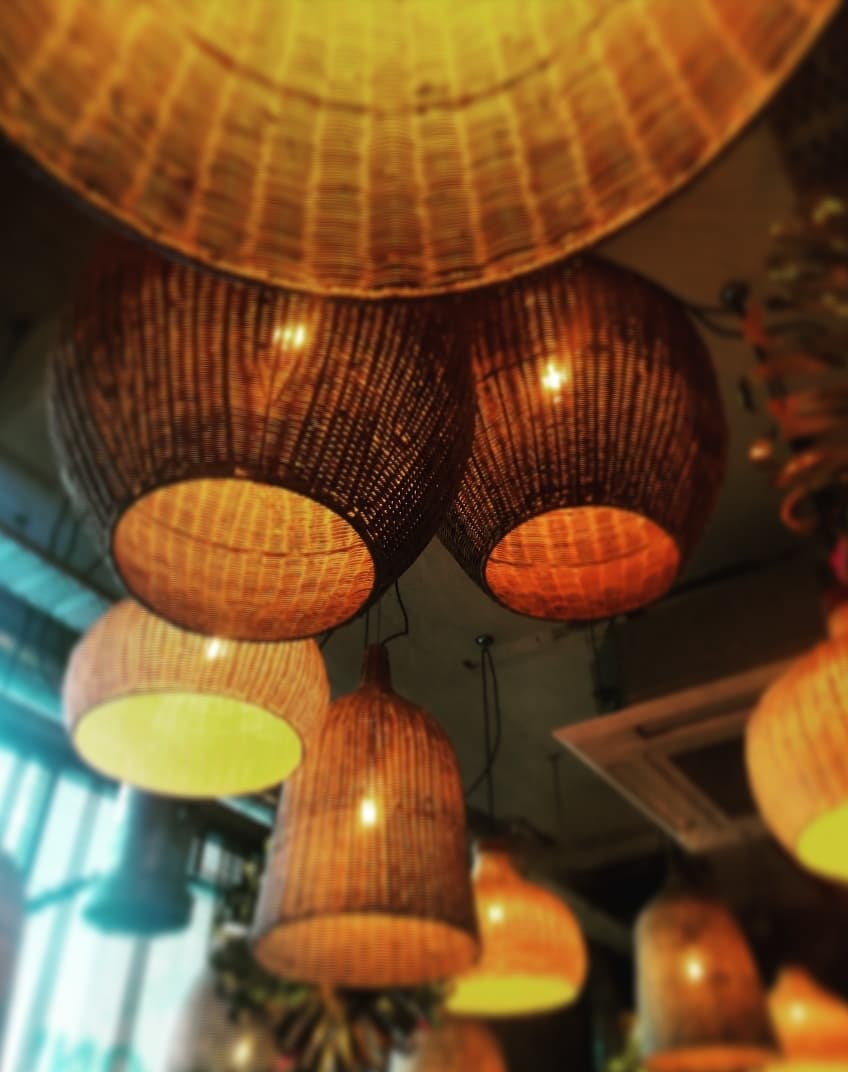
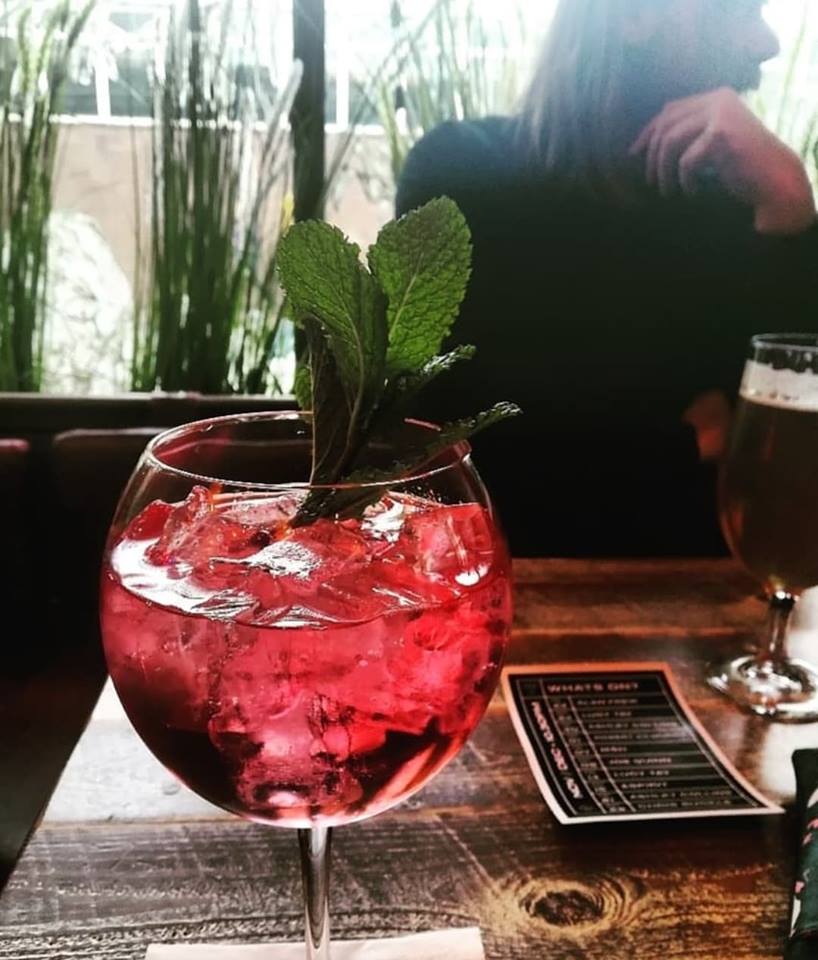
Where the restaurant area exudes a quiet, mellow vibe, T-Bar is a place for a more jovial atmosphere. From here, you can order pizza, spirits – the wet kind, of course – cocktails, gin, cider and beer (bottled and draught), so it was with something pink and gin-tasting I sat gratefully down, beneath a ceiling of warm, wicker lamp-shaded glow. A bright and breezy length of room, with hints of subtle green light emanating from the bar area, and a line of tall, streamline plants lining the windowsills above small, sanded wooden tables, T-Bar is the perfect backdrop for winding down with a positive air on an emotionally draining, wet and windy day. The barman who’d served us single-handedly, was quick and accommodating to tend to our needs, but, after directing me to the ladies’, I couldn’t resist taking a detour and another peek at the jewel in The Tree House’s crown – the beautifully adorned restaurant area.

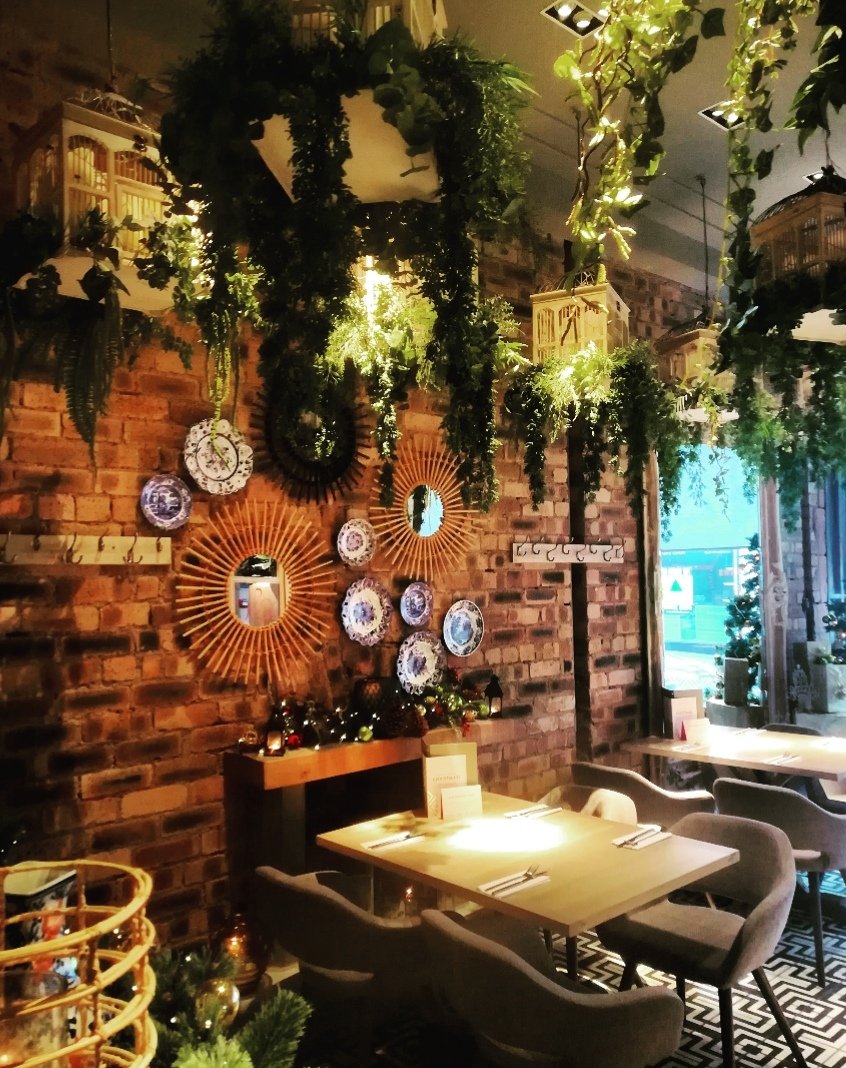
Evidently, this is where the real magic happens. As I gazed with wonder at my surroundings, trying not to draw attention to myself, I was reminded of a scene from The Hobbit, specifically the one where, in Peter Jackson’s, The Desolation of Smaug, the viewer encounters Lothlórien – kingdom of the Wood Elves. Sporadically placed across the ceilings, are softly illuminated hanging bird cages, trailing waterfalls of foliage, complimenting the green hue of pale light blushing from behind the bar. Potted plants and bare brick walls adorned with gold, sunburst mirrors create a honeyed radiance, and give the impression of basking in a wooded glen at sunset. The restaurant is spacious, with a wealth of tables to choose from, though it did not appear overcrowded or busy. For those requiring more intimacy, a handful of booths ensconced a little distance away from the main bustle of the eatery are provided, beside a snuggly situated and gorgeously bedecked dining room available for private hire.

‘Life, light and cocktails’ was the strapline used when I first advertised this establishment via my personal Instagram account, and it still rings true today. Whatever light I’ve had in my life I owe to the unwavering dedication my grandad employed in keeping his only grandchild happy, safe and provided for. He didn’t like cocktails and would’ve quite possibly turned his nose up at the unnecessary frivolity of what makes The Tree House so magnetising, but it is because of him I am able to visit such places and enjoy them to the full. The memory of his funeral will always be a devastating one I know time will never heal, no matter how many unseen years spread into the future. Yet, I’ll forever be thankful for the small shot of fantasy that helped me through the darkest reality of an otherwise sunless day.

THE TREE HOUSE PRICES (May vary – please visit website for updated offers.)

Breakfast: £1.95-£7.95

Lunch: £2.95-£24.95

Dinner: £2.95-£24.95

House Select: Private Dining Set Menu (£16.95 per person.)

House Signature: Private Dining Set Menu (£28.95 per person.)

T-BAR PRICES (May vary – please visit website for updated offers.)

Pizzas: £5 – £8

Drinks: (Please visit website for latest drinks prices and offerings.)

THE OLD REGISTRY, HAWORTH

I always choose a spooky place to stay or visit at Halloween. The festival, to me, holds an atmosphere akin to Christmas… dark, enchanting stories, otherworldly anticipation, and a brewing, almost fantastical Autumnal air that no other time of year can emulate.

Partnered against the rapid drama sequel of Bonfire night, its boisterous sparks of colour illuminating gloomy hillsides that preclude the distant chime of sleigh bells heralding the approach of Christmas, Halloween is the start of something truly special – and what better place to experience Samhain Central than in the magical land of Haworth.

Situated in the Yorkshire Pennines, ten miles west of Bradford, Haworth is a village that goes simply nuts at Halloween. Not the nuts of lager louts and ladies dressed as sexy pussycats. It’s the all-the-stuff-we-love-about-Stranger-Things kind of nuts. Queues of supervised trick or treating children, dressed as witches, vampires and werewolves, trot along shady cobbled walkways lacing windows fogged with benevolent, celebratory pub talk and steam-topped culinary fayre. Kindly locals smile and cackle from front doors surrounded by giant spiders, glowing pumpkins and plastic rat infested yards, as projectors beam scary Disney scenes from upstairs bedroom windows.

Yes, when it comes to Halloween, Haworth is riddled with every delightful reason for the fearful season.

Close community-driven Haworth is a town residing right at the personal centre of subjects that I resonate with. As a student of literature, and writer by profession, its undertone of dark Brontë history has captivated me for as long as I can remember – a connection reinforced by the fact I’m a born and bred Yorkshire woman, myself.

The village, despite its fame, is surprisingly unspoiled by its notoriety and, to this day, presents a snapshot of Victorian Yorkshire that is not so detached from the era it’s most famous for. In fact, if you stand behind the clock tower of St Michael and All Angels’ Church, with your back to the Brontë Parsonage Museum, one-time home of our infamous Brontë sisters, you can still see the embedded bullet holes their father, Reverend Patrick shot into the stonework.

The best way to visit, for a truly authentic experience, is by steam train. The Keighley and Worth Valley Railway – a five-mile-long heritage railway line running from Keighley to Oxenhope – was built in 1861, funnily enough, by John Landsborough, an acquaintance of Charlotte Brontë and civil engineer. Reopened in 2008 and run entirely by volunteers, it remains to this day Haworth’s only form of rail connection, yet more than makes up for this with its Hogwarts Express interior and nineteenth century time warp ambience.

I’d come across The Old Registry some months before, when it was recommended to me by a highly enlightened friend. He and his wife had spent an anniversary there one Christmas and enjoyed an almost Dickens-like adventure, complete with snow, carol singers, and a smattering of four poster decadence within the walls of The Memories Room – the Registry’s prized asset in their collection of enigmatic rooms.

Sitting at the very foot of Haworth’s densely cobbled Main Street, a five-ten minute walk from the Brontë Parsonage, The Old Registry provided an extremely warm welcome to two slightly chilly travellers fresh from the biting arms of a damp, icy Autumn air.

Check-in opened at 3pm, so the sun was already beginning to show signs of sinking as we crossed the steep-stepped threshold and into the Registry’s richly decorated entrance hall. When I say, “richly decorated”, I’m of course referring to the richness of the cosy, comforting hues oozing from every corner and surface of the guest house walls.

The dominant hue, as you can tell from the gallery, is a deep vermilion, broken by a veritable surface feast of vintage prints, framed artworks, decorative mirrors and mounted plaques. In this coordinated chaos of dark upon red, an instant euphoria washed over me, and I knew I’d found my happy place.

It is clear, from the beginning, owners Peter and Leanne Quinn have taken great care to orchestrate the look of their bed and breakfast in alignment with Haworth’s moody heritage. Bursting with character, The Old Registry houses eight individually themed rooms, from four poster decadence to dignified attic elegance. Too late to book the greatly coveted superior Memories Room – a dreamlike vision in golds, greens and mahogany, complete with a luxury en-suite and whirlpool bath  – my partner and I opted for The Lilac Room, one of the few suites left at such late notice.

Our rooms were on the highest floor of the house, which afforded us a delightful view of the surrounding countryside, as well as Haworth’s Central Park, which is well known for its charming flowerbeds.

Unaffected by noise (if there were any) due to the fact we were facing away from the main street, and two floors above the soon-to-be bustling restaurant below, our sleep was a peaceful, undisturbed one, drenched in quiet and graceful surroundings.

The Lilac Room is an attic conversion, and one of The Registry’s Standard Double en-suites – the lowest of three tiers after Superior and Luxury. It is decorated differently to the tumultuous beauty of The Registry’s restaurant and reception area, though the walls are awash with similar brilliance – a deep scarlet damask framed by painted white wooden beams. A smattering of small portraits pepper the walls, while a modest-sized crystal chandelier adds a subtle sparkle to an otherwise demurely decorous room.

The building is old – a bonus given the circumstances of The Old Registry’s cosmetic intentions – a fact that becomes most apparent when walking about the suite itself. With every step, a floorboard creaks, reminding you each second of the history contained inside the brickwork. It is unclear to me exactly when the house was actually built, but my guess is that it’s certainly not of this century, or the last. Either way, it’s old enough to inspire a mind such as mine, that finds thrills in shadowy corners and unexplained noises drifting through the air on a Halloween night in Haworth.

The en-suite is large and spacious – almost as big as the room itself, and complete with the usual bathroom accessories like shower gels, soap and shampoo. The bath is free-standing and large enough for two, with a shower head fitted high into the centre for those not wanting to commit to a longer, more luxurious cleaning routine.

One of the biggest mistakes we could have made during this visit was neglecting to book ourselves in for an evening sitting with The Registry’s downstairs restaurant. Although there were a wealth of excellent eating establishments dotted in close proximity, I remember being somewhat dismayed upon returning after an excitingly eerie pub crawl, and looking through the windows before we entered, at the happy diners sitting amidst a hubbub of chatter, geniality and candlelight. It looked almost like that festive outdoor scene from Home Alone where Kevin McCallister creates a pretend party to fool those two bandits into thinking the rest of his family have returned home for Christmas. 

All was not lost, however, as our room – thank the Dark Lord – included breakfast. I’d heard, from yet another of my highly enlightened friends, that the food at The Old Registry was superb, so was glad of a chance to experience its scrumptious menu in the form of a full English. Greeted warmly, efficiently and graciously by staff from beginning to end, it’s safe to say I wasn’t disappointed as I left with a full stomach, yet a heavy heart, at having to say goodbye to one of the most memorable bed and breakfast I’ve had the pleasure of staying in. With Christmas just around the corner, I’d recommend The Old Registry to any like-minded customer looking for somewhere ethereal to feed their passion for alluring, antiquated climates. I will certainly be returning next year though, this time, my sights will be firmly set upon the elusive Memories Room…

THE OLD REGISTRY

STAR RATING ****

PRICES (May vary – please visit website for updated offers.)

Rooms

Standard Double En-Suite: £80-£85 per night (including breakfast)

Luxury Double En-Suite: £95-£115 per night (including breakfast)

Superior Double En-Suite: £115-£135 per night (including breakfast)

Restaurant (Set menu also available)

Starters: £4.95-£7.95

Mains: £14.95-£19.95

Desserts: £5.95-7.95